
HVLS Fans for Leisure, Sports & Fitness
Leisure, Sports & Fitness Airflow
Gyms, sports halls, leisure centres and indoor activity venues can place very different demands on a building’s airflow. High activity levels, changing occupancy, large internal volumes, tall ceilings, courts, spectator areas and existing heating or ventilation systems can all influence how comfortable the space feels and how effectively air is distributed.
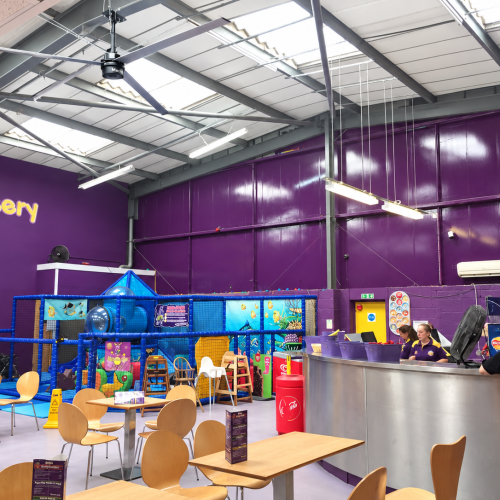
MegaFan provides HVLS fans and commercial air-movement systems for leisure, sports and fitness environments, helping move large volumes of air through occupied spaces without relying on concentrated high-speed airflow. Solutions can support gyms and fitness centres, multi-use sports halls, padel and indoor court venues, climbing centres, trampoline parks, indoor arenas and other large leisure buildings.
The correct airflow strategy depends on the activity taking place. Gym and functional-fitness areas may benefit from stronger people-focused air movement, while racquet and ball-sport spaces require more careful fan positioning and speed control to avoid unwanted court-level airflow. Multi-use leisure centres may also need flexible controls so airflow can be adjusted as occupancy and activities change throughout the day.
HVLS fans can also help distribute fresh or conditioned air further across large courts, halls and spectator areas, but air circulation should complement rather than replace the building’s ventilation system. Swimming pools and aquatic centres require separate consideration because humidity, condensation, corrosion and ventilation are specialist design issues.
- CASE STUDIES
Leisure, Sports & Fitness Clients
Different Activities Need Different Airflow Strategies
Gyms, sports halls, leisure centres, indoor courts and activity venues can contain very different airflow requirements. High activity levels, changing occupancy, large internal volumes, tall ceilings, spectator areas and existing heating or ventilation systems can all influence how effectively air moves through the building.
MegaFan systems can provide wide-area HVLS circulation, quieter high-volume airflow for medium-height spaces and intelligent control so air movement can be matched to the activity, occupancy and layout of each area rather than applying the same airflow strategy throughout the facility.

Ready to Find the Right AirMax System for Your Building?
Tell us about your building, airflow requirements and the areas you want to improve. Our team can help recommend the right fan size, quantity, positioning and control solution for your site.
Sports and fitness facilities contain more overhead equipment, occupied activity zones and potential obstructions than a typical open industrial building. Fan position, clearances, airflow speed, installation access and electrical requirements should therefore be reviewed before the final system is ordered.
Court Airflow Needs Careful Positioning
Indoor padel venues require airflow to be planned around the playing area, court enclosure, lighting, roof height and ball trajectory. More airflow is not automatically better — fan speed and positioning should support player comfort without creating excessive court-level air movement.
Training Equipment Changes The Clearance Zone
Gyms can contain functional-fitness rigs, TRX systems, climbing ropes, rings, punch bags, cardio equipment and free-weight areas. The fan layout must account for both permanent equipment and the way the space is actually used.
Fan Clearance & Obstructions
Each proposed fan position needs an appropriate clear operating envelope.
- Roof steelwork and bracing
- Lighting fixtures
- HVAC ductwork
- Fire alarms and smoke detectors
- CCTV and Wi-Fi equipment
- PA and AV equipment
- Netting and suspended sports equipment
Sports & Training Equipment
Equipment capable of entering the fan clearance envelope must be identified before installation.
- TRX suspension systems
- Gymnastic rings
- Climbing ropes
- Punch bags
- Functional fitness rigs
- Sports netting
- Training aids and accessories
Installation & MEWP Access
Installation will normally require suitable elevated-access equipment such as a scissor lift or cherry picker.
- Door width and height
- Clear internal access routes
- Roller-shutter openings
- Mezzanine access
- Suitable floor loading
- Clear installation area
Electrical Supply
The required electrical supply depends on the fan model selected for the facility.
- Suitable nearby power supply
- Single or three-phase requirements
- Controller location
- Distribution-board manufacturer
- Available outgoing ways
- Sufficient electrical capacity
Structure & Mounting
Final fan positions and mounting arrangements depend on the building structure.
- Roof construction
- Available structural mounting points
- Fan loading requirements
- Roof bracing
- Suspended building services
- Additional structural review where required
Operating Hours & Activities
Installation and final fan operation should reflect how the sports facility is actually used.
- Opening hours
- Peak usage periods
- Scheduled classes
- Court booking periods
- Restricted access times
- Health and safety requirements
Protect The Playing Environment
Fan speed and location should be selected with consideration for ball flight, court-level air movement, lighting, netting, structural clearances and the occupied playing zone. The objective is player comfort without creating unnecessary draughts across the court.
Design Around How Members Train
The survey should consider not only fixed gym equipment but also activities that use ropes, rings, resistance bands, suspended equipment, training aids or other objects capable of entering the fan operating area.
- FAQS
Frequently Asked Questions
Leisure, sports and fitness buildings can contain very different airflow environments. Gyms, sports halls, indoor courts, climbing centres, trampoline parks, training areas and multi-use leisure facilities can all vary in roof height, occupancy, activity intensity and the amount of air movement that is appropriate around users.
Fan speed, positioning, structural clearances, suspended equipment and existing ventilation should all be considered as part of the final design. For ball and racquet sports in particular, airflow should be carefully controlled so that player comfort is supported without creating unwanted court-level air movement.
Which MegaFan Products Are Suitable For Leisure, Sports & Fitness Facilities?
The right solution depends on the building and activity, with AirSlim, AirMax, AirBreeze and AirGo considered as part of the selection process. AirSlim can suit many medium-height gyms and fitness areas, AirMax can provide wide-area airflow in larger, high-roof sports halls and leisure buildings, while AirBreeze can provide more focused airflow around selected training or activity zones. The suitability of AirGo, along with the final product selection, fan speed and positioning, should be assessed against the facility’s layout, available space and how each area is used.
Are HVLS Fans Suitable For Indoor Sports Halls?
Yes, subject to the building height, structure and available clearances. Basketball hoops, scoreboards, netting, lighting, suspended equipment and ball trajectories should all be considered before final fan positioning is confirmed.
Can HVLS Fans Improve Comfort In Gyms During Summer?
Yes. Moving air across occupied areas can create a noticeable cooling effect for people exercising. However, an HVLS fan does not mechanically lower the room temperature like air conditioning; it improves perceived comfort through air movement.
Can The Fans Be Used During Winter?
Yes. In suitable heated buildings, fans can operate at lower speeds to help redistribute warm air that has risen and collected near the roof back towards occupied areas. This can be particularly useful in high-roof sports halls, arenas and leisure buildings.
Can MegaFan Systems Be Used In Indoor Tennis, Padel Or Racquet-Sport Facilities?
Potentially, but the airflow strategy needs to be activity-specific. Fan speed and positioning should support player comfort without producing excessive airflow at court level that could interfere with play. Indoor tennis and other racquet-sport environments therefore require careful assessment rather than simply using the highest possible airflow.
Can Fans Be Installed Above Functional Fitness Or Training Equipment?
Only where the required clearances can be maintained. Ropes, rings, TRX equipment, punch bags and other suspended training systems need to be included in the layout and clearance assessment before a fan position is approved.
Does A HVLS Fan Provide Fresh Air?
No. A ceiling fan mainly circulates the air already inside the building. Fresh air still needs to enter through suitable natural or mechanical ventilation, with an appropriate route for stale air to leave. Air circulation should support the ventilation strategy rather than replace it.