
HVLS Fans for Aircraft Hangars
Airflow Systems for Aircraft Hangars
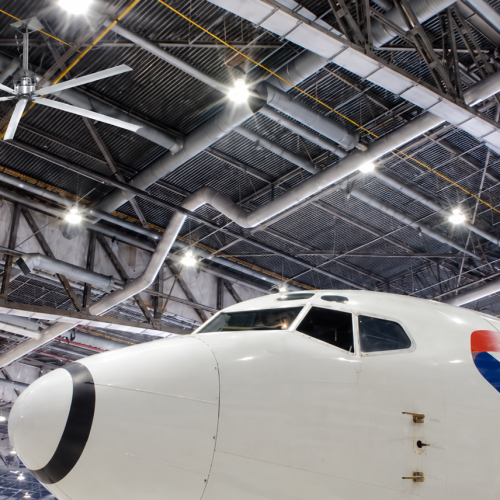
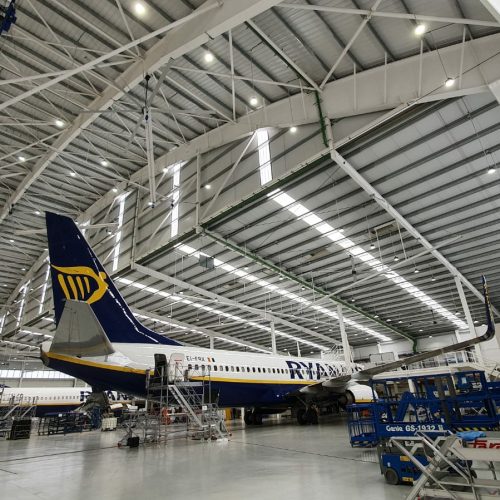
Aircraft hangars and maintenance, repair and overhaul (MRO) facilities require airflow designed around their scale and use. High roofs, large hangar doors, aircraft wings and fuselages, maintenance platforms and overhead services can interrupt circulation, leaving uneven conditions across maintenance bays and occupied working areas.
MegaFan provides HVLS fans and industrial airflow systems for aircraft hangars, with layouts developed around aircraft positions, maintenance activities and access requirements. Systems can combine wide-area ceiling-fan circulation with targeted air movement at engineering stations and independently controlled maintenance bays.
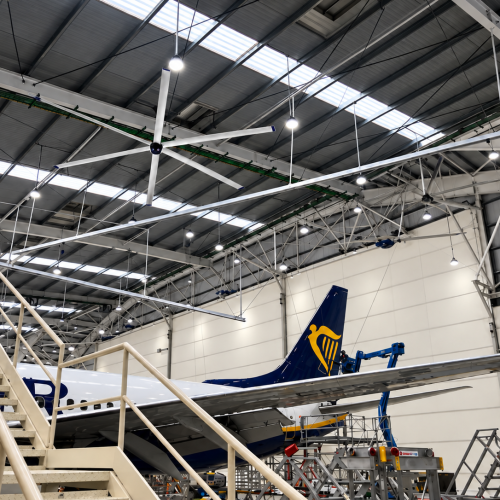
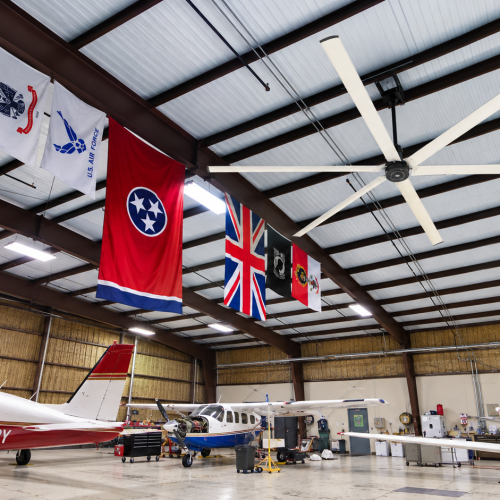
In suitable high-bay hangars, AirMax HVLS fans can support air movement across large working areas during warmer weather. During heating periods, low-speed operation can help redistribute warm air accumulated beneath the roof towards occupied levels. Where aircraft or maintenance equipment restrict circulation, directional fans can provide more focused airflow to specific work areas.
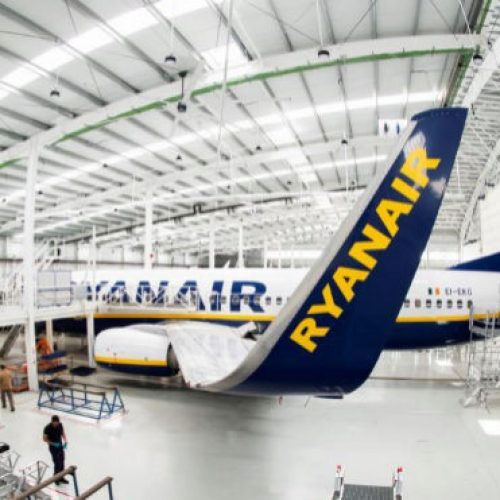
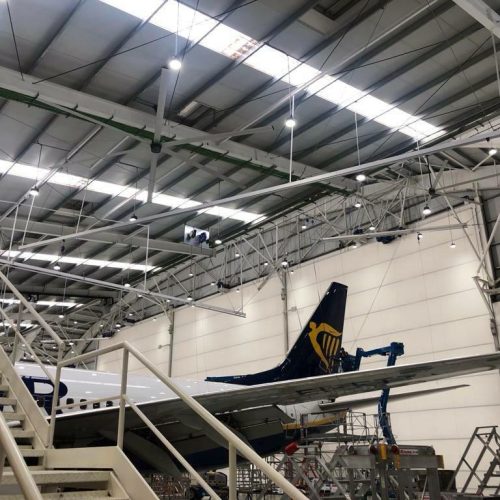
Fan selection and positioning take account of aircraft movement, tail heights, lifting equipment, maintenance access and required clearances. Circulation systems are designed to complement existing heating and ventilation, while specialist extraction remains a separate requirement for activities that generate fumes, dust or other airborne contaminants.
Aircraft storage and maintenance hangars can contain significant differences in air movement across the same building. High roofs, large hangar doors, aircraft wings and fuselages, maintenance platforms and overhead services can interrupt circulation and leave some working areas less well served than others.
An effective hangar airflow strategy should reflect the aircraft accommodated and the work carried out around them. Wide-area circulation, targeted maintenance-bay airflow and ventilation should be coordinated around aircraft positions, access routes, occupied work areas and required operational clearances.
Broad air movement can support more consistent conditions across suitable open hangar areas, with fan coverage assessed around parked aircraft and maintenance equipment.
Focused air movement can support occupied maintenance positions where aircraft structures or access equipment limit the reach of wider-area circulation.
Circulation should work alongside the hangar’s fresh-air supply and extraction arrangements, with specialist process extraction assessed separately for relevant maintenance activities.
Fan settings can be planned for summer comfort and winter heat redistribution, with operation adjusted around maintenance shifts, aircraft movements and hangar door use.
Aircraft storage, servicing and maintenance hangars require airflow planned around the aircraft and the people working alongside them. High roofs, large internal volumes, hangar doors, changing aircraft positions and maintenance platforms can all affect how effectively air reaches occupied areas.
The airflow requirement can differ between an open maintenance bay, a working position beneath a wing and an elevated inspection platform. Fan selection and positioning should reflect these local conditions, the hangar’s existing ventilation and the clearances needed for aircraft and equipment movement.
Broad air circulation can help improve air movement across suitable open hangar areas, with coverage assessed around aircraft positions and maintenance equipment.
Focused air movement can serve defined working positions where wings, fuselages or access platforms restrict the reach of wider-area circulation.
Circulation should be coordinated with fresh-air supply, extraction and normal hangar door use, while preserving the specialist ventilation required for maintenance processes.
Fan settings can support summer air movement and, where suitable, gently redistribute accumulated roof-level warmth during winter heating periods.


Ready to Find the Right System for Your Building?
Tell us about your building, airflow requirements and the areas you want to improve. Our team can help recommend the right fan size, quantity, positioning and control solution for your site.
- FAQS
Frequently Asked Questions
Aircraft hangars require airflow designed around their size, layout and maintenance activities. Roof height, large hangar doors, aircraft positions, access platforms, overhead services and existing ventilation all influence how air reaches occupied working areas.
These FAQs address the key questions about selecting, positioning and controlling MegaFan systems for aircraft hangars, including equipment clearances, maintenance-bay airflow and seasonal operation.
Can HVLS fans be used in aircraft hangars?
Yes, where the hangar’s structure, layout and operational clearances allow. HVLS fans can provide broad air circulation across suitable hangar areas, helping improve air movement around occupied working zones. Selection and positioning must account for the aircraft, maintenance equipment and existing building services.
How are fans positioned around aircraft wings and tail sections?
Fan positions are assessed against the aircraft accommodated, including wingspan, tail height and movement routes. The design also considers raised maintenance platforms, lifting equipment and overhead services. Clearances must accommodate normal aircraft and equipment movements, not just their parked positions.
Will one large fan provide airflow throughout the hangar?
Not necessarily. Aircraft fuselages, wings, maintenance platforms and other obstructions can interrupt circulation. Some hangars may benefit from several independently controlled fans or a combination of wide-area circulation and targeted airflow at specific maintenance positions.
Do open hangar doors provide enough air movement?
Open doors can change internal airflow, but the effect depends on wind direction, outside conditions and the building layout. Strong air movement near the entrance does not establish that air is reaching working areas further inside. The design should consider normal operation with the doors both open and closed.
Can hangar fans help maintenance teams feel cooler in summer?
Air movement can improve perceived comfort for teams working in warm conditions. The benefit depends on whether the airflow reaches their actual working positions, including areas beneath wings or beside maintenance platforms. Circulation fans do not refrigerate the air or replace measures needed to manage excessive heat.
How do HVLS fans support winter heating in aircraft hangars?
Warm air can accumulate beneath a high hangar roof while occupied areas remain cooler. Where this temperature difference exists, suitably controlled low-speed circulation can help redistribute warmth towards working level. Operation should provide gentle mixing without creating uncomfortable draughts around maintenance teams.
Can airflow be directed towards individual maintenance bays?
Yes. Targeted air movement can be considered for inspection positions, engineering stations and other occupied areas that receive limited benefit from general circulation. Its direction and speed should suit the task and avoid interfering with nearby extraction or sensitive maintenance processes.
Can the system accommodate different aircraft types?
The airflow design should consider the range of aircraft expected to use the hangar. Changes in wingspan, tail height and parking arrangement can affect both clearances and circulation. If the fleet or maintenance layout changes significantly, fan positioning and operating settings should be reviewed.
What information is needed for an aircraft hangar airflow assessment?
Useful information includes hangar dimensions, roof height, aircraft types, parking layouts and maintenance working positions. Details of hangar door use, heating, ventilation, overhead equipment and planned operational changes also help establish suitable fan locations and control requirements.