
Brinksway Tool: improving factory energy efficiency with six HVLS fans
As part of Hyde Group's commitment to more responsible manufacturing, Brinksway Tool invested in six MegaFan HVLS fans to make better use of existing heat and improve conditions across its factory floor.
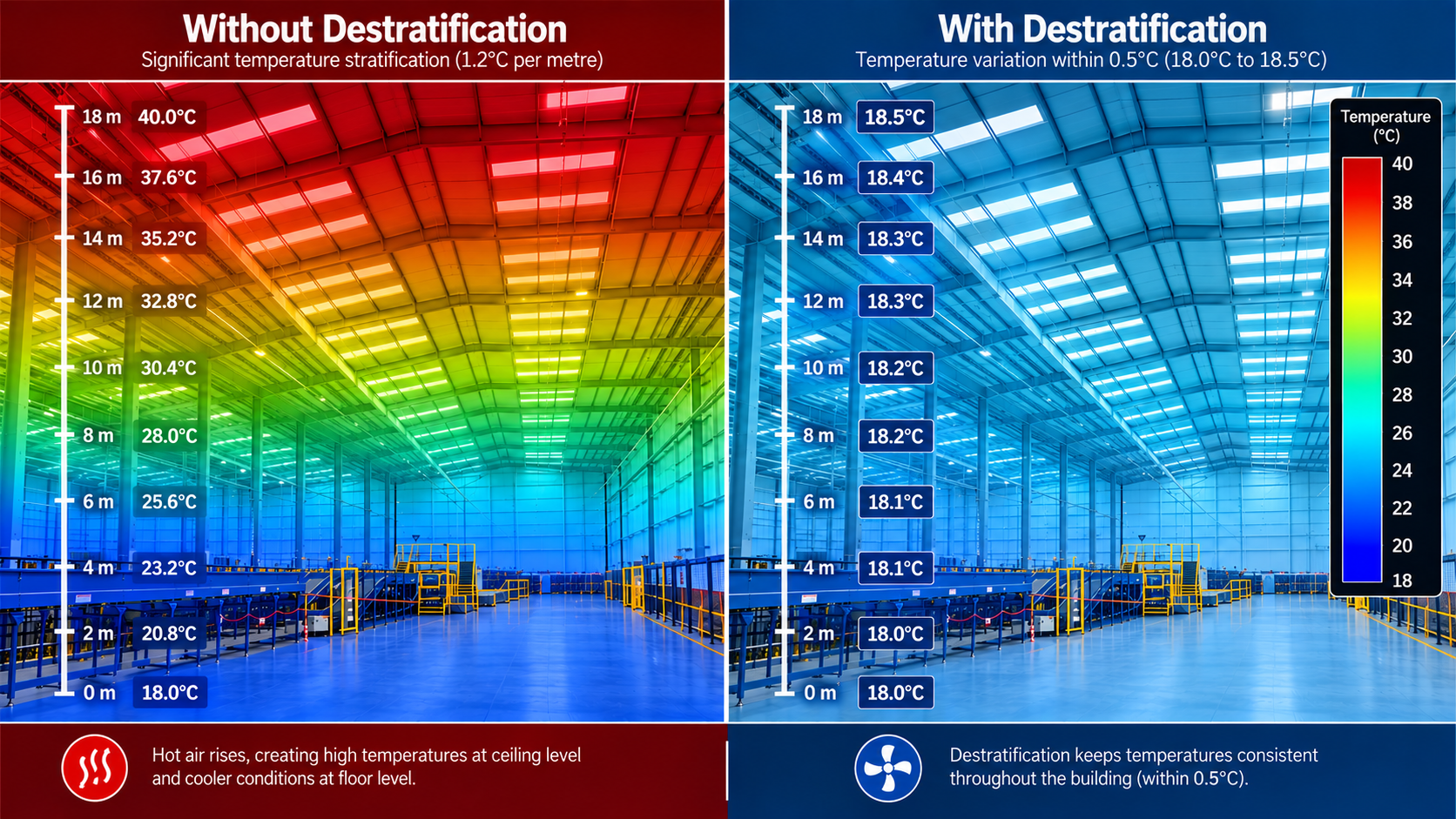
Why heat collected under the roof was an opportunity
Large manufacturing buildings can experience thermal stratification: warm air produced by heating systems, machinery and processes rises into the roof space while the occupied working zone remains cooler.
This makes it harder to maintain consistent temperatures around production areas. Heating energy can be concentrated above the people who need it, particularly in high-bay environments.
Brinksway Tool wanted a practical improvement consistent with Hyde Group's focus on operating efficiency, environmental responsibility and long-term reliability.
Six large, slow-moving fans to circulate air more effectively
Brinksway Tool selected six High Volume Low Speed (HVLS) fans from MegaFan Technologies. Rather than relying on a fast, concentrated airflow, the system is designed to move substantial volumes of air gently through the space.
In colder weather, the fans help recirculate warm air towards the occupied zone. During warmer periods, increased air movement can improve how comfortable people feel around the factory floor.

A practical benefit in both winter and summer
Bring accumulated warmth back down
Slow air circulation helps move heat from the roof area back towards people, equipment and working areas. A smaller roof-to-floor temperature difference can reduce unnecessary heating demand.
Create a comfortable, gentle breeze
Faster fan operation increases air movement around the working floor, helping staff feel more comfortable without the need to refrigerate the entire volume of the building.
Explore the Brinksway fan layout in 3D
Use the MegaFlow Designer below to explore the saved six-fan layout, inspect positions, change views and examine the illustrative airflow display. The model is an interactive design aid, not a substitute for detailed surveying or commissioned performance measurements.
More effective temperature control and a better factory environment
In its published account, Hyde Group says the six-fan investment is delivering energy savings while improving factory working conditions. It also describes more effective use of existing energy, less waste and lower carbon impact as part of the site's efficiency improvements.
Improved temperature control
Moving warm air through the building can reduce the difference between temperatures at roof and occupied levels.
Better use of existing energy
Heat produced by heating and manufacturing processes can be redistributed instead of remaining high above the shop floor.
Improved working conditions
More consistent airflow supports comfort through winter and summer, without intense, disruptive high-speed draughts.
Interested in the engineering behind the savings?
MegaFan commissioned University of Liverpool researchers to investigate heating power and destratification in a generic warehouse using CFD modelling. Those independent modelling scenarios help explain the potential for energy savings, but they are not measurements of the Brinksway installation. Read the University of Liverpool research summary.
Could better airflow cut wasted heat in your factory?
Tell MegaFan Technologies about your building, working heights and existing heating system. We can help assess whether HVLS fans and a suitable layout could improve comfort and efficiency.